Dr. Su


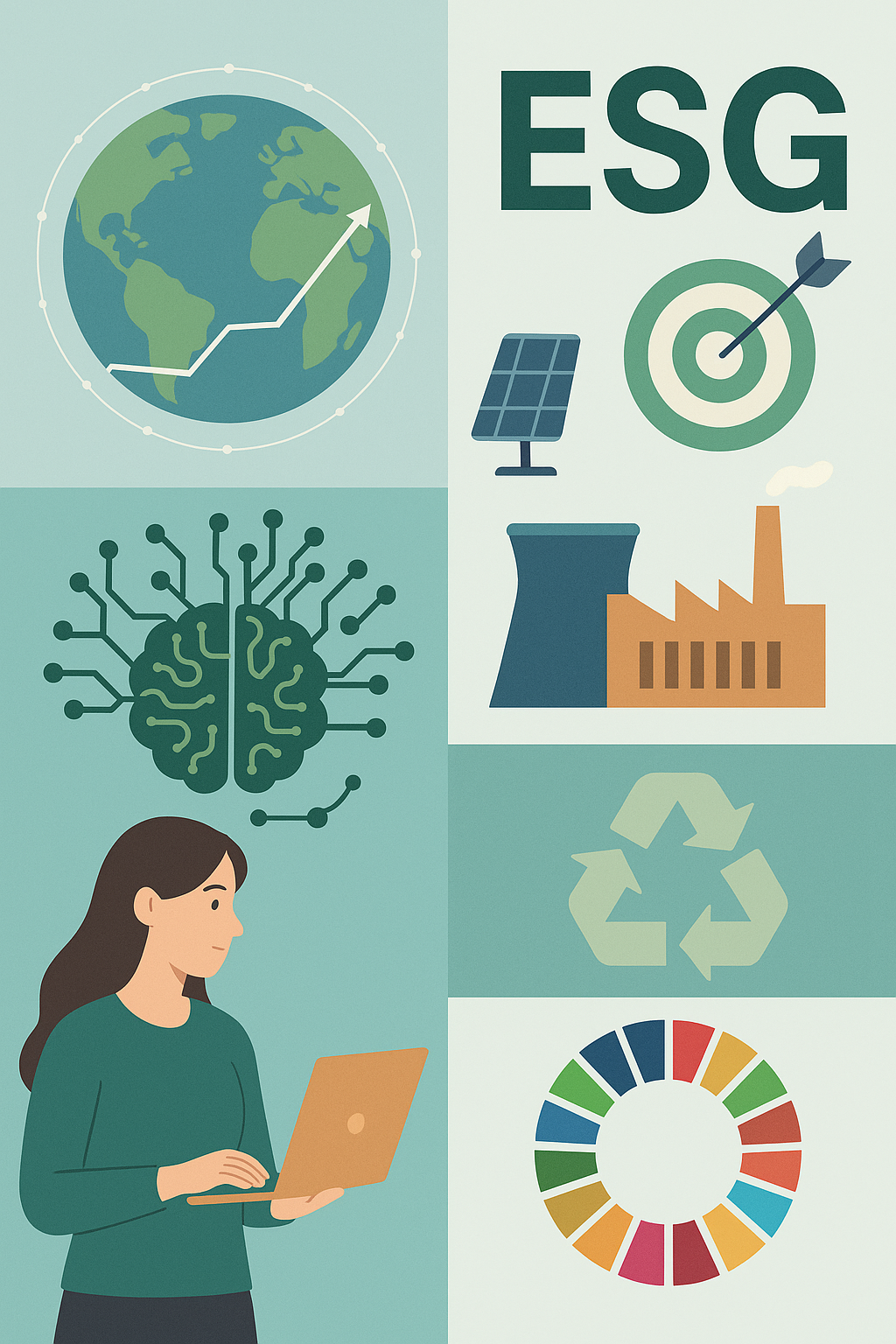
This course offers a university-level exploration of ESG (Environmental, Social, and Governance), aiming to equip students with the knowledge and skills to critically analyze sustainability issues through an interdisciplinary lens and apply practical solutions within real-world systems.
It combines foundational theories—such as the Planetary Boundaries framework and the UN Sustainable Development Goals (SDGs)—with deep dives into the ESG impacts of key industries like energy, technology, and fast fashion. It also addresses topics like global sustainability regulations, AI-assisted policy and ethics, climate tech, and circular economy trends.
Through case studies, industry labs, and tools (including AI), students will develop critical thinking, solution design, and communication skills, while gaining insight into ethical leadership and stakeholder engagement. The course ultimately supports students in identifying authentic ESG actions and shaping meaningful green career paths.
Analytical and Critical Thinking: Ability to analyze sustainability challenges from an interdisciplinary perspective, assess industry impact, distinguish genuine ESG efforts from superficial claims, and reflect critically on real-world cases.
Problem-Solving and Design Skills: Capability to apply solutions to real-world systems, propose ESG strategies and improvements, design circular economy models, and develop crisis response plans.
Understanding of Core Sustainability Concepts: Familiarity with—or willingness to learn—key concepts such as the Planetary Boundaries framework, UN SDGs, the three pillars of ESG, and global sustainability regulations.
Communication and Presentation Skills: Competence in writing reports or articles (e.g., reflection essays, crisis memos) and delivering oral presentations or proposals.
Tool Proficiency: Willingness to learn and use analytical tools, including AI tools like ChatGPT, to support policy drafting or explore future risks.
Ethical Judgment and Leadership Thinking: Ability to explore corporate ethical dilemmas, evaluate the impact of leadership decisions on sustainability, and propose ethically sound alternatives.
Stakeholder Awareness: Understanding of how to balance business costs with stakeholder expectations and conduct effective stakeholder analysis.
Career Planning Awareness: Interest in sustainability-related career opportunities and willingness to engage in career exploration and planning activities.
Dr. Su
Frequently Asked Questions
The Open edX platform works best with the current versions of Chrome, Edge, Firefox, or Safari.
Please refer to our list of supported browsers for the most up-to-date information.